Moles

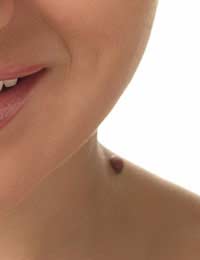
Though sometimes unsightly and therefore embarrassing most skin moles rarely present any true health risks. In fact there was a time when a mole in a certain place was actually considered attractive. In the late 1950’s and well into the 60’s moles were not entirely euphemistically referred to as “beauty marks”. Just think Marilyn Monroe, or more recently super model Cindy Crawford, or the Material Girl herself; Madonna. Although Madonna recently had the distinctive mole below her nose surgically removed. Moles are part of the larger group of skin lesions known as naevi. The technical term for a skin mole is a melanocytic naevus. A mole can be described as any small dark spot on the skin. Moles can appear almost anywhere on the body, and can be of a variety of shapes and coloration.
Mole Myths
Moles, depending on where they are located on the body can be embarrassing and unattractive. Yet some people, again depending on where they are located, can find them “cute”. There are still many misconceptions about moles. Most of the myths or misconceptions about moles regard their links to skin cancer. There is a myth that picking at or scratching a mole can cause it to grow larger and become cancerous. This is untrue. You should not pick at a mole – or ever attempt to remove it yourself, for other health reasons – primarily that you could give yourself a very nasty infection – but there is no truth to the idea that picking at a mole can make it cancerous. In fact most moles are what dermatologists refer to as benign lesion. While moles can often get mistaken for melanomas, or skin cancer, most moles are not cancerous.Moles and Skin Cancer
There are basically two kind of skin moles, those we are born with often referred to as “birth marks” and acquired moles – those that that appear seemingly spontaneously later in life. Most moles that you are born with rarely develop into melanomas. There is however certain genetic factors that predisposes a person to being born with, or develop a number of moles, sometimes one hundred or more. The condition is called Dysplastic Nevi. There is some evidence that those with this condition are more likely to have moles that develop into skin cancer. No matter if you are concerned about a mole that you were born with or one that has been acquired, skin care specialists say that you need to keep on eye on it for changes. They suggest this simple mnemonic ABCD - for Asymmetry, Border, Color and Diameter.Only a medical professional such as a dermatologist can properly evaluate if a mole should be removed, or has the potential to be cancerous. Using the ABCD mnemonic, you are advised to observe any mole or skin lesion for changes in color, size, or shape, especially if the border becomes ragged. If you notice significant changes in the appearance of a mole, you certainly should have it checked by a physician. Even if the appearance does not change, if a mole begins to itch, becomes inflamed or bleeds – it is certainly time to be evaluated by a medical professional.
Mole Removal
Although skin care professionals say that the large majority of moles turn out to be nothing more than benign skin lesions -still many people choose to have them removed for cosmetic reasons. Again never attempt to remove a mole on your own. A qualified skin care professional can help you evaluate if a mole should be removed and suggest the best course of action to do so. Mole removal techniques include:- Lasers: Lasers have been used by dermatologist to remove moles. But lasers really are only effective on very flat moles that are on the surface of the skin and do not go very deep
- Electrocautery – is a technique were electricity is applied to “burn off” moles that are not very deep and at the surface layers of the skin.
- Surgery: Is the most effective method of removing a mole, as it allows the surgeon to be sure to remove the mole entirely, even down to the deepest layers. Most Mole removal surgery is a simple in office procedure, where the dermatologist will apply an anesthetic and a freezing solution to the mole, and then shave it away with a scalpel
Prevention of Acquired Moles
Skin care experts agree that most acquired moles come from sun exposure. Increased sun exposure can also darken existing moles. Since the UVA and UVB rays of sunlight are also known to be the number one cause of most skin cancers, skin care specialists recommend that you:- Try to avoid sun exposure during the peak hours of sun light
- Always wear sun screen with an SPF rating of at least 15 when outdoors for any length of time
- Do not use tanning booths
- Adult Bed Wetting
- Coping With a Speech Impediment
- Coping With Memory Loss
- Coping With Excessive Skin Tags
- What Causes Worms and How are they Treated?
- Frequent Urination and How to Treat it
- Anal Bleeding and What Could be the Cause
- Living With and Treatments for Haemorrhoids
- Herpes and Blisters on the Body
- Dealing With Impetigo
- Coping With Pruritus Ani
- Loss of Libido
- Treatments for Snoring
- Thrush
- Types of Skin Scars
- Wind
- Unwanted Hair
- Incontinence
- Irritable Bowel Syndrome
- Piles
- Puberty Issues
- What Are Shakes?
- Diarrhoea
- Belly Button Discharge
- Anal & Genital Warts
- Constipation
- Excessive Sweating

Re: Talking to an Elderly Person About Hygiene
My mom is 95. I had a talk with her about having someone come in and do light housekeeping, wash her bed sheets…
Re: Adult Bed Wetting
I am 57 and still wet the bed most nights.
Re: Verrucas
I'm 13 in about 6 days I've had verrucas since I was 8-9, it's so embarrassing because I have to get changed in a group for PE I have one on the outside of…
Re: Hairy Toes & Feet
So funny how bigots of both signs say the opposite, that the shaved man aesthetics is influenced by gays, now some gay people say it's…
Re: Inverted Nipples
Hi im 13 and yesterday i realised i have inverted nipples but i had a surgery near my heart when i was four months old and i just want to not have…
Re: Adult Bed Wetting
i have been a bedwetter for so long now i am used to it and sleep in a single bed next to my wife
Re: Adult Bed Wetting
Hi im 52 the last 6 months ive started to.wet the bed. It can happen 2 or more times a week . I went to bed at 2am i woke up at 5am needing to…
Re: Unsightly Warts on the Face and Neck
Ihello I have face warts many years and Neck ,pls help
Re: Adult Bed Wetting
i was a bedwetter as a child until 15 due to molestation a few times growing up.. then went in hospital age 18 and wet the bed whilst staying…
Re: Inverted Nipples
Blb - Your Question:Hi I’ve recently had my baby and ever since Then I have one inverted nipple not breastfed should I be concerned?